


I. Charcoal Types and Production
There is not just one type of charcoal; its quality and uses vary greatly depending on the raw materials and production process.
1. Main Types
Ordinary Charcoal (Black Charcoal):
Raw Materials: Primarily made from hardwoods (such as oak and elm).
Process: Fired in an earthen kiln, the wood undergoes incomplete combustion within the kiln, isolating it from the air and allowing carbonization to occur.
Characteristics: It has a rough, black surface, a low carbon content (approximately 80%), contains a high concentration of impurities, produces smoke when burned, and is inexpensive. It is primarily used for barbecues and industrial fuel.
Mechanical Charcoal (Formed Charcoal):
Raw Materials: Wood chips (sawdust, wood shavings, branches, etc.), agricultural waste (rice husks, straw, coconut shells, etc.).
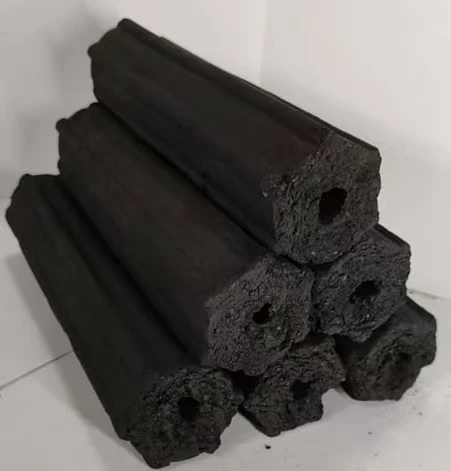
Process: The raw materials are crushed, dried, and formed (pressed into hollow rods using a briquette machine), then carbonized at high temperatures in a carbonization furnace.
Features: Regular shape (mostly hexagonal prisms or round bars), high density, long burning time, smokeless and odorless, and high carbon content (85%-90%). It is a mainstream product in the current market, widely used for barbecues and heating.
II. Applications and Markets
1. Main Application Areas
Barbecue Fuel: The largest consumer market, particularly in Europe and the United States, places high demands on charcoal quality (smokelessness, high heat resistance, and burn resistance).
Industrial Reducing Agent and Fuel: Used as a reducing agent or to provide a high-temperature heat source in industries such as metallurgy (such as the production of crystalline silicon and industrial silicon) and the chemical industry.
Household Heating: In some countries and regions, charcoal remains an important winter heating fuel.
Agriculture and Soil Improvement: Crushed charcoal (biochar) can be used to improve soil, retain moisture and nutrients, and sequester carbon and reduce emissions.
Adsorbent (Activated Carbon): As mentioned above, it has a wide range of uses and is a key raw material in the environmental protection industry.
2. Global Market Landscape
Major Producers: China is the world's largest charcoal producer and exporter, with a complete supply chain and cost advantages. Other major producers include Brazil, Indonesia, Nigeria, and India.
Major Consumers/Importers: Developed and affluent developing regions such as the European Union, the United States, Japan, South Korea, and the Middle East are the main importers, with stable demand and strict quality requirements.
Trade Flows: Overall, charcoal flows are from developing to developed countries.

